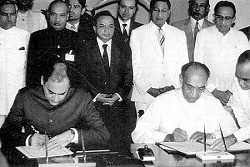
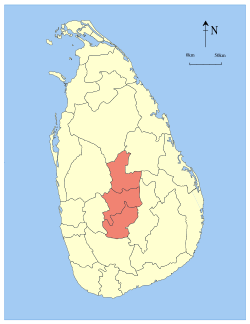
The Provincial Council system was established in Sri Lanka in the year 1988 under the 13th Amendment to the Constitution of the Democratic Socialist Republic of Sri Lanka. Accordingly the functions of the Central Provincial Council commenced on 14th July 1988. The Central Provincial Council Authority Area consists of three Administrative Districts, namely, Kandy, Matale and Nuwaraeliya. There are 58 elected members in the Central Provincial Council, representing the major communities, Sinhala, Tamil and Muslims living in the Central Province.
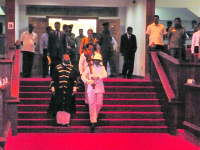 The Governor appointed by the President, functions as the Chief Executive of the Central Province. There is a Board of Ministers with the Chief Minister at the head and four other Ministers to aid and advice the Governor in the exercise of his function. According to the 13th Amendment to the Constitution, the subjects and function allocated to the Central Provincial Council are shown in the 1st list called the Provincial Council List.
The 2nd list which is called the Reserved List shows subjects and functions reserved for the parliament. The 3rd list, referred to as the Concurrent List, is of the subjects and functions that can be exercised by both the Parliament and the Provincial Council.
The Provincial Council, subject to the provisions of the Constitution, frames statutes applicable to the Central Province in respect of any matter set out in the Provincial Council List. The Provincial Council has no power to make statutes on any matter set out in the Reserved List. The Central Provincial Council, subject to the provisions of the Constitution, may make statues applicable to the Central Province. In respect of any matters set out in the Concurrent List, laws applicable to the Central Province can also be made by the Parliament and the Provincial Council in consultation with each other. The statutes framed as above and passed by the Central Provincial Council, become law of the Central Province on receiving the assent of the Governor as prescribed in the 13th Amendment. The Governor of the Central Province has been vested with financial powers under the provisions of Provincial Council Act No 42 of 1988 and under the 13th Amendment to the Constitution.
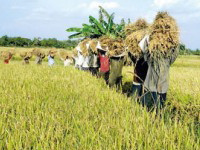
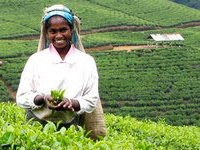 The province also holds a certain significance to the export sector, especially for the much sought after commodity "Ceylon Tea". The Central Province is identified with its broad ethnic diversity; Sinhalese amounts to 65.35%, Indian Tamil amounts to 19.92%, Sri Lankan Moors amounts to 9.20%, Sri Lankan Tamil amounts to 5.05%, and Burgers amounts to 0.15%. The Council has been able to successfully address diverse and specific needs of these segments. In 2001 the population of the Central Province was estimated to be 2,423,966, which represented a 12.97% of the total population making the Central Province the second most populated in Sri Lanka. This presents an important implication in terms of administration and financing of the province as a whole. Kandy is the most populated district in the Central Province, accounting to a population of 1,279,028 individuals, followed by the Nuweraeliya District of 703,610 individuals, and the Matale District of 441,328 individuals according to national census carried out in 2001.
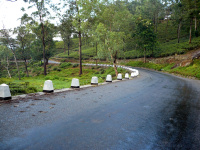 The year 2010 was an outstanding year for road development activities carried out by the Department of Local Government. In 2010 alone nearly 800km of roads were developed out of which more than 600km constructions were carried out in the Kandy District. During 2009-2011 1600Km of roads were developed. The target is to add another 1500Km of roads to the provincial road network by 2016. Much of the work was done during the last three years in the Kandy District. More than 500 sanitary facilities were established in the Kandy District during this period.